



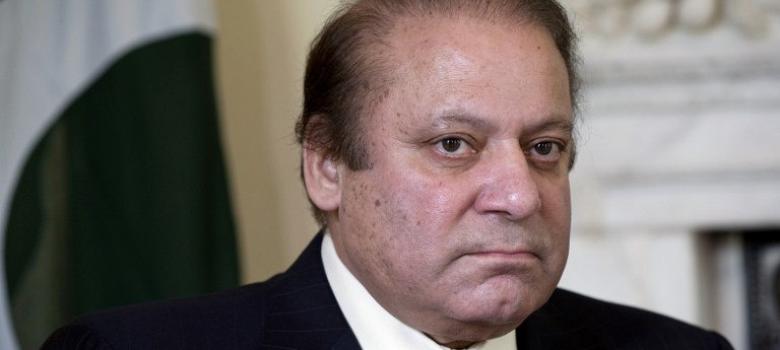
Today is Pakistan’s Independence Day. Yet the mood in the capital, Islamabad, is not one of celebration but panic. Prime Minister Nawaz Sharif faces his toughest challenge yet as two rival politicians threaten to derail Pakistan’s already fragile democracy by staging simultaneous protests to call for his head.
The first politician is cricketer-turned-demagogue Imran Khan. Unhappy with winning only the Khyber-Pakhtunkhwa province in last year’s parliamentary election, Imran is keen to challenge Sharif’s vote base in Punjab. He first tried to gain traction by alleging that last year's election was rigged in four constituencies.
Once the courts and election tribunals rebutted his accusations, he claimed that the courts, then headed by Supreme Court Justice Iftikhar Chaudhry, were party to the conspiracy. Other who are in on the plot, said Khan, are Pakistan’s largest media company, the Jang Group, and Najam Sethi, the veteran journalist who was Punjab's caretaker chief minister in the run-up to the election.
These wild-eyed accusations should have been dismissed quickly, but Sharif’s government has pussyfooted around them, giving them greater weight than they merited. To drive home his point, Khan has planned an Azadi March on the capital today. Up until a few days ago, Sharif had ignored Khan, but then panicked and subsequently over-reacted when he decided that Khan's demonstration could pose a threat to his regime.
The government has invoked Article 245, a clause allowing the army to be called in to ensure law and order. While the government claimed that the ongoing operation against the Taliban has made the capital vulnerable, it was evident that this is a ploy to stop the Azadi March.
Ban on protests
Sharif has banned all protests, blockading Islamabad and Lahore, Punjab’s biggest city. The blockade and enhanced security has made it difficult for people and supplies to go in and out of Punjab.
The protest, while ostensibly about electoral reform, can also be seen as a last-ditch attempt by Khan to grab power. He has exhausted all other avenues to the prime minister’s office but is too impatient to wait until the next election. Khan wants Sharif’s government to resign and call for a fresh election.
The second politician who aims to march on the capital on Independence Day is Tahirul Qadri, the leader of the Pakistan Awami Tehreek, which did not even contest last year’s election. Qadri is a cleric who runs an Islamic charity from Canada, his country of residence. His grievances with the ruling government have been less clear than Khan’s but his demands are simple: a revolution.
Qadri’s origins and motivations are obscure, and many suspect that he is backed by Pakistan’s powerful military, whose dislike for Sharif is an open secret. Sharif was ignominiously overthrown in a military coup in 1999 and sent into exile in Saudi Arabia. The army has also bristled at his decision to try former military chief Pervez Musharraf for treason.
By encouraging Qadri, the military could be looking to weaken Sharif’s rule without staging a coup. In fact, Qadri staged similar protests in January last year that also threatened to bring down the government before frantic backdoor negotiations defused the crisis.
Disproportionate response
So far, Sharif’s actions have only increased his troubles. In June, heavy-handed police action resulted in the deaths of nine Qadri supporters outside his home in Lahore. Two more people were killed this weekend when his supporters again tried to reach his house, blocked by policemen and barriers. The disproportionate response has only strengthened his resolve, Qadri claims.
Khan is also aware of the army lurking in the background, but has absolved himself of any responsibility. "The responsibility will lie squarely on Nawaz Sharif if the army steps in," he said.
Sharif himself alluded to the dangers of the march when he decried autocratic rule in a statement on Monday. "Dictatorships have only brought us misery and trouble…Pakistan has no options but democracy," he said.
Sharif is acutely aware of the damage that these long marches can do to Pakistan’s nascent democratic project. After all, he took part in many of them himself, bringing down Benazir Bhutto’s government twice in the 1990s with military support.
This time around, he has been keen to reach out to other parties, including the opposition People’s Party either as mediators or for counsel, despite Khan proclaiming that "the time for negotiations is over".
This Independence Day, there won’t be time for reflection on nationhood, the past or the future. Instead, Pakistanis will be holding their collective breath, wondering where their country’s politics will be taking them next.
We welcome your comments at
letters@scroll.in.
The first politician is cricketer-turned-demagogue Imran Khan. Unhappy with winning only the Khyber-Pakhtunkhwa province in last year’s parliamentary election, Imran is keen to challenge Sharif’s vote base in Punjab. He first tried to gain traction by alleging that last year's election was rigged in four constituencies.
Once the courts and election tribunals rebutted his accusations, he claimed that the courts, then headed by Supreme Court Justice Iftikhar Chaudhry, were party to the conspiracy. Other who are in on the plot, said Khan, are Pakistan’s largest media company, the Jang Group, and Najam Sethi, the veteran journalist who was Punjab's caretaker chief minister in the run-up to the election.
These wild-eyed accusations should have been dismissed quickly, but Sharif’s government has pussyfooted around them, giving them greater weight than they merited. To drive home his point, Khan has planned an Azadi March on the capital today. Up until a few days ago, Sharif had ignored Khan, but then panicked and subsequently over-reacted when he decided that Khan's demonstration could pose a threat to his regime.
The government has invoked Article 245, a clause allowing the army to be called in to ensure law and order. While the government claimed that the ongoing operation against the Taliban has made the capital vulnerable, it was evident that this is a ploy to stop the Azadi March.
Ban on protests
Sharif has banned all protests, blockading Islamabad and Lahore, Punjab’s biggest city. The blockade and enhanced security has made it difficult for people and supplies to go in and out of Punjab.
The protest, while ostensibly about electoral reform, can also be seen as a last-ditch attempt by Khan to grab power. He has exhausted all other avenues to the prime minister’s office but is too impatient to wait until the next election. Khan wants Sharif’s government to resign and call for a fresh election.
The second politician who aims to march on the capital on Independence Day is Tahirul Qadri, the leader of the Pakistan Awami Tehreek, which did not even contest last year’s election. Qadri is a cleric who runs an Islamic charity from Canada, his country of residence. His grievances with the ruling government have been less clear than Khan’s but his demands are simple: a revolution.
Qadri’s origins and motivations are obscure, and many suspect that he is backed by Pakistan’s powerful military, whose dislike for Sharif is an open secret. Sharif was ignominiously overthrown in a military coup in 1999 and sent into exile in Saudi Arabia. The army has also bristled at his decision to try former military chief Pervez Musharraf for treason.
By encouraging Qadri, the military could be looking to weaken Sharif’s rule without staging a coup. In fact, Qadri staged similar protests in January last year that also threatened to bring down the government before frantic backdoor negotiations defused the crisis.
Disproportionate response
So far, Sharif’s actions have only increased his troubles. In June, heavy-handed police action resulted in the deaths of nine Qadri supporters outside his home in Lahore. Two more people were killed this weekend when his supporters again tried to reach his house, blocked by policemen and barriers. The disproportionate response has only strengthened his resolve, Qadri claims.
Khan is also aware of the army lurking in the background, but has absolved himself of any responsibility. "The responsibility will lie squarely on Nawaz Sharif if the army steps in," he said.
Sharif himself alluded to the dangers of the march when he decried autocratic rule in a statement on Monday. "Dictatorships have only brought us misery and trouble…Pakistan has no options but democracy," he said.
Sharif is acutely aware of the damage that these long marches can do to Pakistan’s nascent democratic project. After all, he took part in many of them himself, bringing down Benazir Bhutto’s government twice in the 1990s with military support.
This time around, he has been keen to reach out to other parties, including the opposition People’s Party either as mediators or for counsel, despite Khan proclaiming that "the time for negotiations is over".
This Independence Day, there won’t be time for reflection on nationhood, the past or the future. Instead, Pakistanis will be holding their collective breath, wondering where their country’s politics will be taking them next.
